Delivered in a presentation meeting by Hosnul Wahid at Ijen-Geopark Bondowoso office.
“What is a Geopark?”
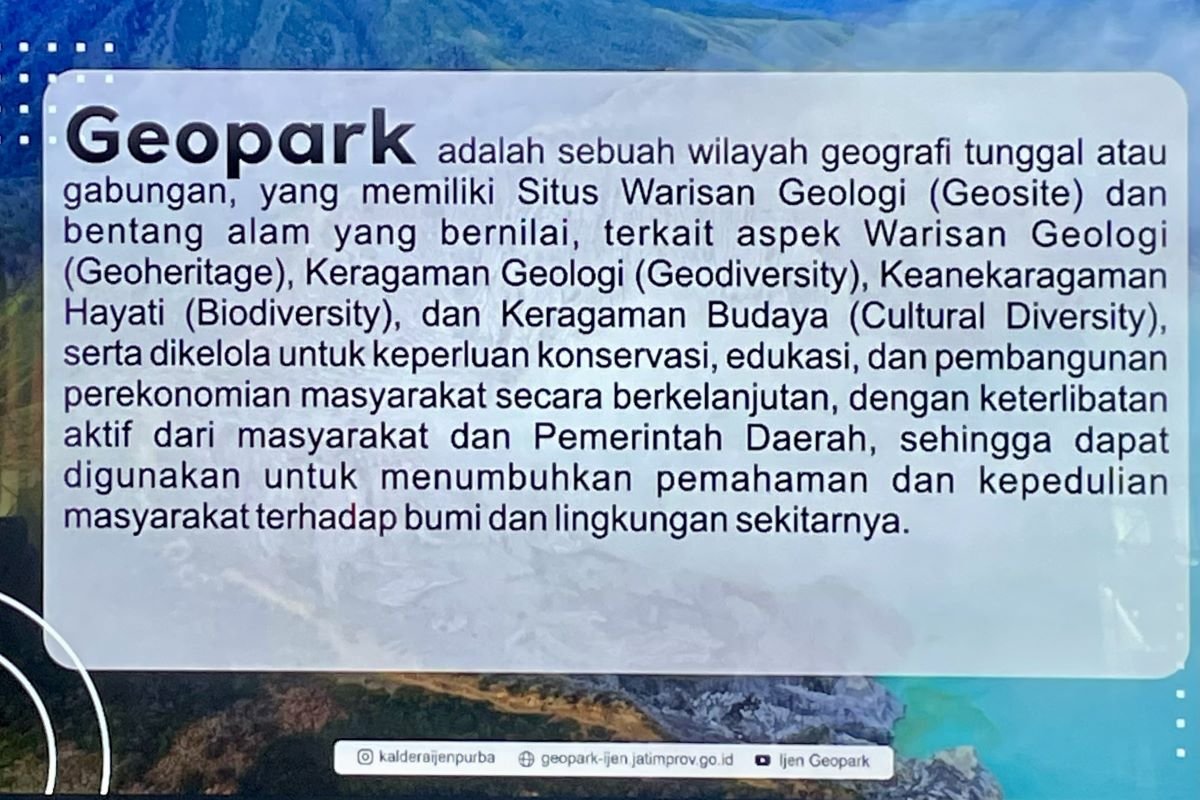
A Geopark is a kind of geographical model — an area based on its geological characteristics. It can stand alone as a single region — a district, a village, or a regency — or it can span across multiple regions, provinces, even countries.”
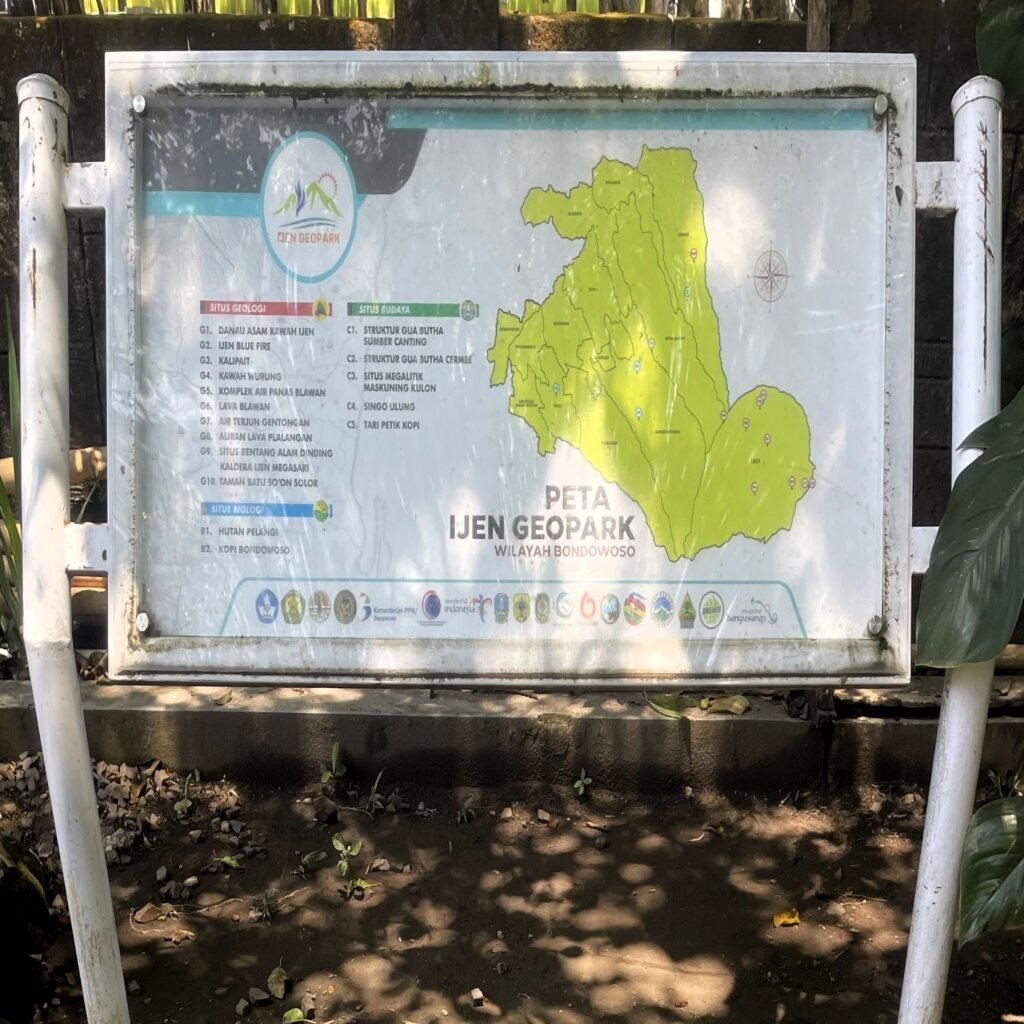
That’s why we introduced Ijen Geopark, a vast geological park connecting two regencies on the eastern tip of Java: Bondowoso and Banyuwangi. Two different landscapes and cultures, united under one natural and geological heritage.
The Earth as a Living Museum
“Geopark literally means a park of the earth.”
It is not merely a beautiful natural site but a place that preserves and celebrates geological heritage — the rocks, landforms, fossils, and the human civilizations shaped by them.
Yet, a Geopark goes beyond geology. It also embraces biological heritage, biodiversity, and the way humans live in harmony with nature.
Three Pillars of Geopark Development
We emphasized that a Geopark stands on three major pillars:
Conservation, Education, and Sustainable Economic Development.
- The goal is to help local communities grow economically while protecting the planet
- To manage the environment wisely
- Create jobs that come from local resources
Through this approach, a Geopark becomes not only a tourism destination but also a living classroom — a place where science, culture, and livelihood come together in balance.
Collaboration Across Sectors
One of the keys to a successful Geopark is collaboration.
Government, local communities, businesses, academics, media, and NGOs all play vital roles in the same ecosystem of development.
“There’s already a legal framework. What matters now is how we strengthen the synergy.”
This cooperation allows different groups to contribute — from conservation work and scientific research to promoting educational tourism. And among all, local tourism actors hold a very special role.
Tourism Practitioners as Geopark Ambassadors
Tour guides, associations such as HPI, and community groups called “Geopark ambassadors”, They are the ones who directly interact with visitors, connecting scientific knowledge with lived experience.
“Through websites like Sam Java Tour, these efforts can reach a wider audience. Because, in many ways, tourism activists are the real messengers of Geopark values.”
Their work doesn’t just promote destinations — it also drives local economic growth, providing jobs in hospitality, transport, and guiding services.
Geoparks and the SDGs
The Geopark framework aligns closely with the United Nations Sustainable Development Goals (SDGs) — creating employment, protecting ecosystems, and improving the well-being of rural communities.
It’s a model that values sustainability over exploitation, encouraging growth that benefits both people and the planet.
A Network That Connects the World
Geoparks are not isolated entities.
Indonesia is home to 12 UNESCO Global Geoparks, each part of the UNESCO Global Geopark Network.
They are connected through the National Geopark Network (NGN) and the Asia-Pacific Geopark Network, as well as the Global Geopark Network under UNESCO.
In East Java, two major Geoparks stand out:
- Gunung Sewu Geopark, which spans three provinces: Central Java, Yogyakarta, and East Java.
- Ijen Geopark, covering two regencies: Bondowoso and Banyuwangi.
From the Ancient Sea to the Peaks of Ijen
The session closed with a glimpse into what’s coming next — the story of how Ijen was formed.
“When we talk about Ijen Geopark, we talk about its volcanoes, its civilization, and its culture. But long before that, this land began from the ancient sea. From there, the surface slowly rose, shaping the volcanic landscapes we see today.”
That opening marks the transition to the next part — a deeper look into the geological history of Ijen, the tectonic forces of the Pacific Ring of Fire, and how human civilization thrived at the foot of volcanoes.