Every mountain has a story — not only of eruptions and rocks but of names, meanings, and memories that live among the people who see it every day.
When the Land Rose Again
After ancient eruptions covered the valleys and filled the basins with sediments, the land seemed to grow quiet. But beneath the surface, something was still alive — pressure, magma, and movement were preparing for another rise.
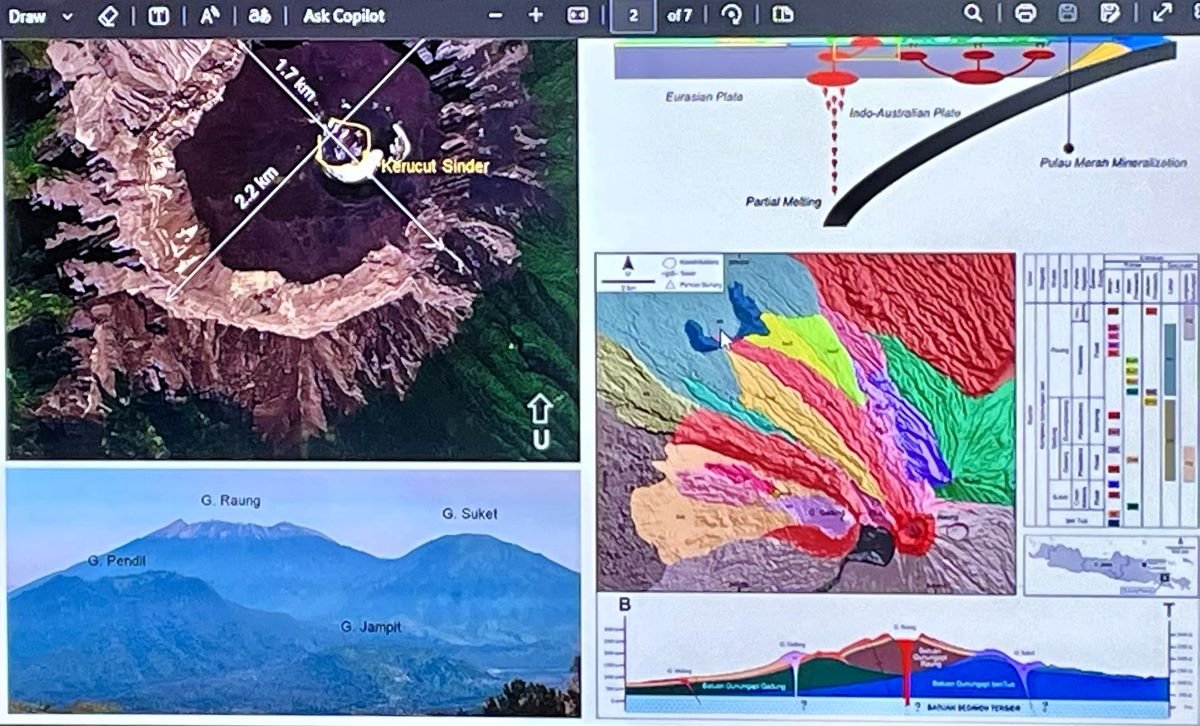
From this process, a new formation appeared — Mount Pegge, a name given by local people who saw the shape and said it looked “peggé,” or bulging from the ground. Local names like this are not random; they reflect how people understood and felt their land.
Then came Mount Raung, rising higher than the rest. Unlike other volcanoes, Raung stood upon the “basement” of older mountains — Suket, Pendil, and Jampit. It grew by building upon what already existed. That is why Raung looks massive, powerful, and — as locals say — gagah, majestic.
The name Raung itself means “roar.” It fits perfectly, for when Raung erupts, its thunder can be heard across valleys and villages — a mountain that truly roars.
The Great Collapse and Global Consequence
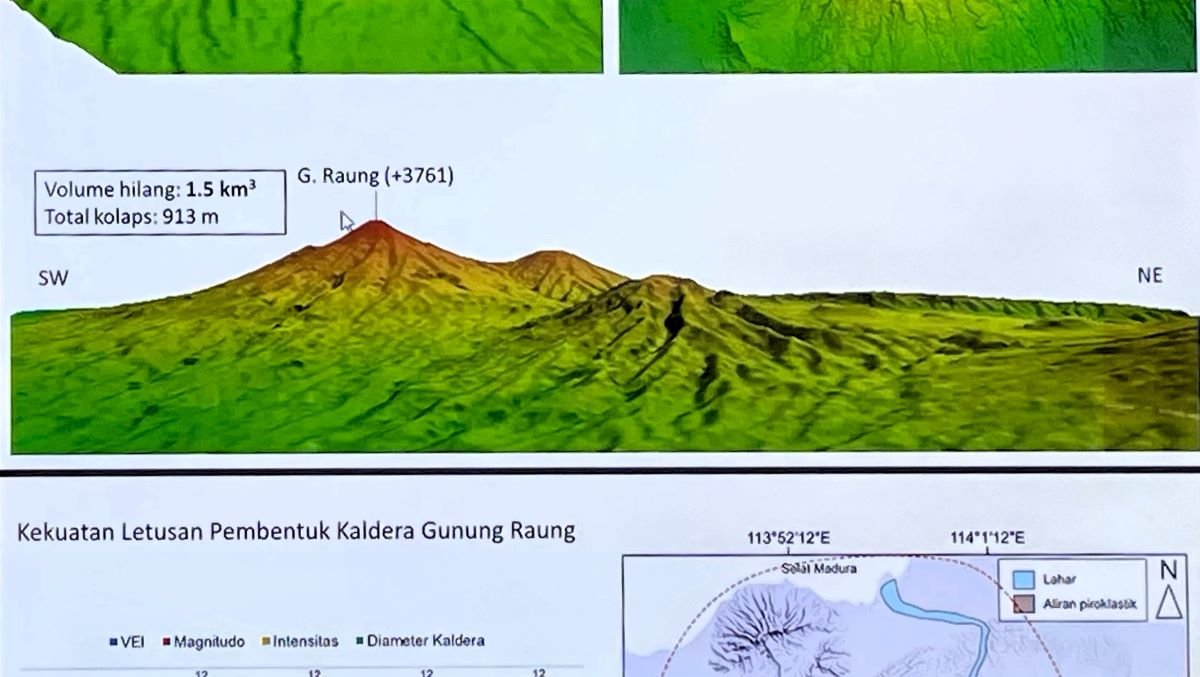
Research estimates that Raung once reached an elevation of around 3,761 meters, before collapsing nearly 900 meters during a massive eruption. The volume lost was estimated at 1.5 cubic kilometers — a monumental event.
In terms of global impact, Raung’s eruption stands among the greats — alongside Tambora and Krakatau. When Tambora erupted in 1815, it darkened skies for weeks and caused crop failures in Europe. Raung, too, once sent enough ash to block sunlight, affecting life far beyond Java.
But unlike the ancient Ijen Caldera, whose collapse happened hundreds of thousands of years earlier, Raung’s eruptions occurred when human civilization had already flourished. People lived, farmed, and built — and when Raung roared, they recorded it not just in stones, but in stories.
Traces of Civilization Beneath the Ash
Archaeological studies in Jebung, near the home of local guides, revealed brick structures buried under thick volcanic sediments — evidence of settlements destroyed yet preserved by eruption.
These findings suggest that a relatively advanced society once existed here during the Classic Era.
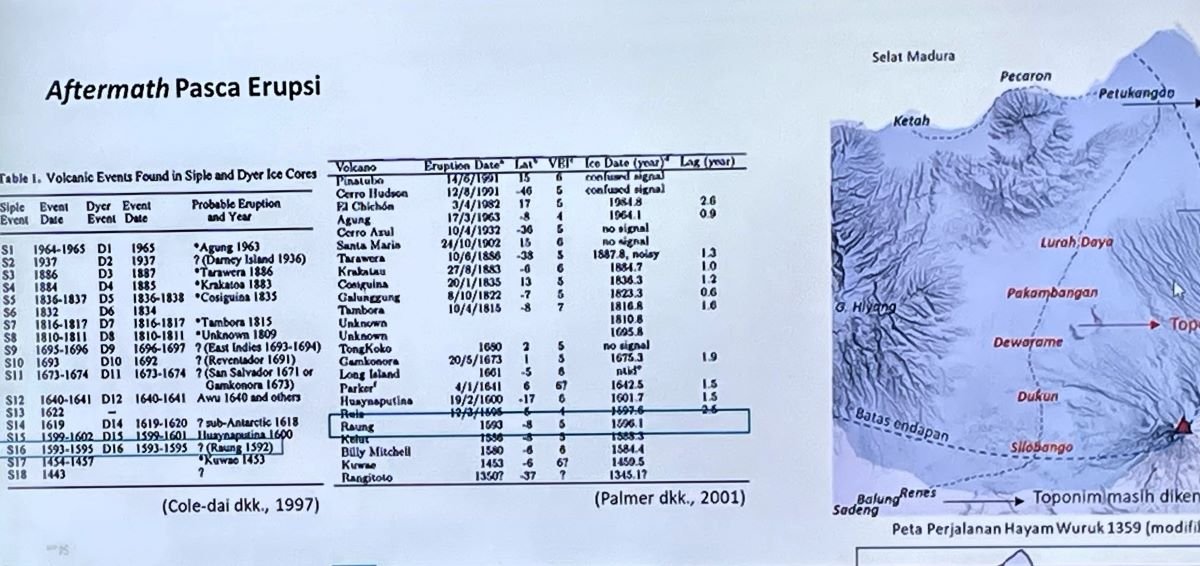
Old place names — or toponyms — mentioned in the ancient Negarakertagama text, such as Lurah Daya, Pakambangan, Dewa Rame, Dukun, Silabango, and Tangsil, align with modern sites around Telogosari, Puger, and Bondowoso.
Some of these names still survive; others faded with time, their meanings known only through stories told by the elders.
These toponyms show that during the Majapahit period, small kingdoms or micro-civilizations thrived around Raung — communities living in harmony with the land, building temples and farms in the shadows of the mountains.
The Mountain That Still Speaks
Today, when visitors climb or view Mount Raung from afar, few realize they are looking at a monument of both geology and history. Every layer of ash, every ridge of lava, every name carved into maps — they are pages of a story spanning thousands of years.
As researchers continue to interpret the data, and as storytellers and guides translate science into human language, Ijen Geopark becomes a living museum — where nature and culture merge, where every mountain is both a witness and a teacher.
And when the wind passes over Raung’s crater, carrying the sound of its distant rumble, one might imagine that the mountain is still speaking.
The end.