From the Ancient Sea to the Rise of Volcanoes: The Birth of the Ijen Caldera (Part 2)
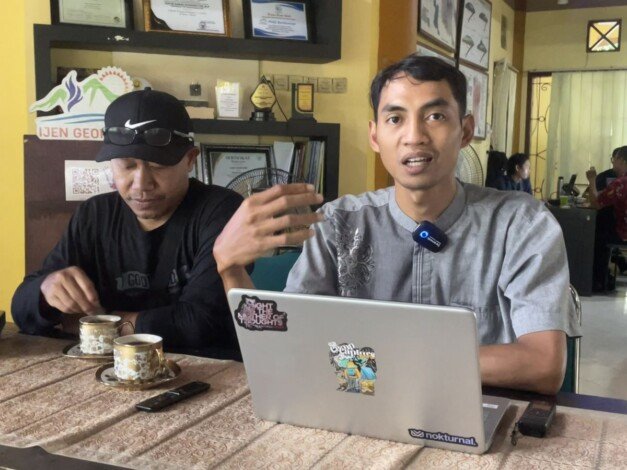
Delivered in a presentation meeting by Hosnul Wahid at Ijen-Geopark Bondowoso office. Roughly 30 million years ago, deep beneath what is now East Java, the earth began to move.The tectonic plates — those massive slabs of the earth’s crust — slowly collided and pushed against each other. Some plates were thick and heavy, others thin and flexible. When they met, the heavier plates were forced downward, sliding beneath the lighter ones. As these movements continued, the pressure and heat deep underground built up, and the molten rock — magma — began to seek a way to escape.That movement, that ancient pressure, was the birth of volcanoes. The Ancient Volcanoes of Southern Java If we look back to those times, many of Java’s earliest volcanoes formed along its southern coast — ancient giants that are now long extinct. Over millions of years, wind, rain, and sea waves eroded their peaks. What…
Understanding Ijen Geopark: The Earth’s Story (Part 1)
Delivered in a presentation meeting by Hosnul Wahid at Ijen-Geopark Bondowoso office. “What is a Geopark?” A Geopark is a kind of geographical model — an area based on its geological characteristics. It can stand alone as a single region — a district, a village, or a regency — or it can span across multiple regions, provinces, even countries.” That’s why we introduced Ijen Geopark, a vast geological park connecting two regencies on the eastern tip of Java: Bondowoso and Banyuwangi. Two different landscapes and cultures, united under one natural and geological heritage. The Earth as a Living Museum “Geopark literally means a park of the earth.”It is not merely a beautiful natural site but a place that preserves and celebrates geological heritage — the rocks, landforms, fossils, and the human civilizations shaped by them. Yet, a Geopark goes beyond geology. It also embraces biological heritage, biodiversity, and the way…
Ijen Plateau: the Largest Caldera in Java
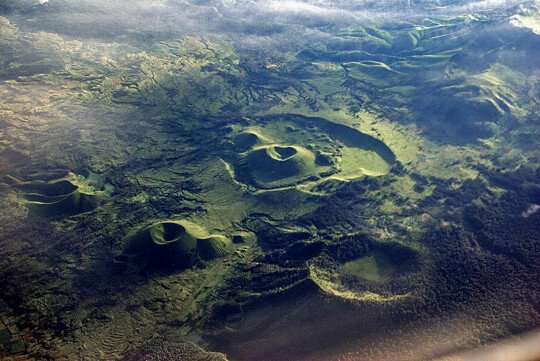
At the eastern tip of Java – Indonesia, a large caldera region stretching from the catastrophic eruption of an old giant volcano during the Pleistocene geological period, making it the largest caldera in Java with a diameter of 20 km. The complex consists of dozens of small, extinct stratovolcanos, among them formed the crater. With a wide panorama of mountains and natural, it’s no wonder that this region has become a popular tourist destination. Ijen Crater, the only phenomenal crater with the most acidic crater lake in the world, making many people to travel here.
Jampit: the Estate Remote Coffee Plantation
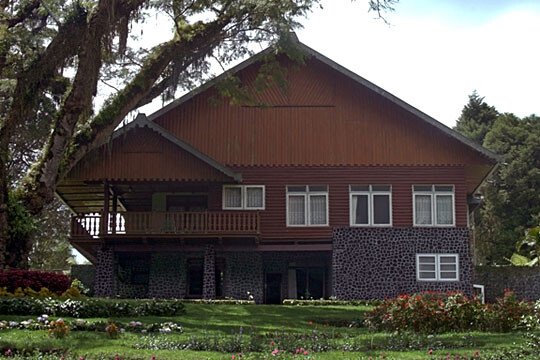
n the Ijen Plateau, there are two plantations managed by PT Perkebunan Nusantara XII — Kalisat Jampit Plantation and Blawan Plantation. Both estates are well known for cultivating Arabica coffee. The Arabica coffee from the Ijen Plateau is internationally recognized as Java Coffee. Its taste is mild, with a balance of bitterness and a slightly sour note, unlike Robusta coffee, which tastes purely bitter. One of the most interesting places to visit in this area is the Jampit Coffee Plantation, which also features a 6-hectare strawberry garden. To reach the plantation, you can start from the three-way junction in Sempol and travel about 14 kilometers. Along the way, you’ll be surrounded by scenic views of coffee plantations stretching across the hills. In the Jampit area, there is a historic building that now serves as a guest house. Although located in a remote area, the Jampit Guest House is well known…