The Ancient Lake and the Fiery Birth of Ijen (Part 3)
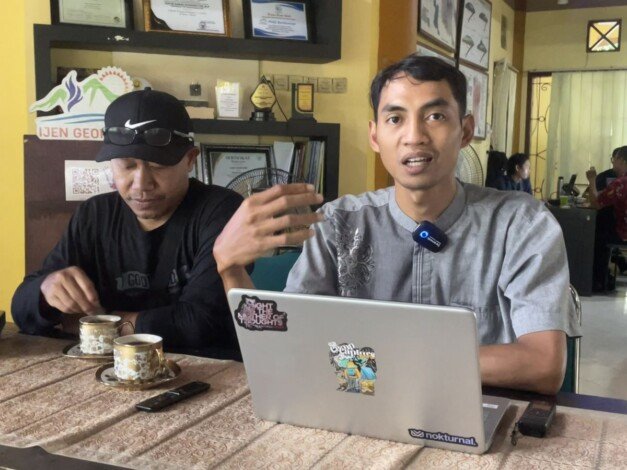
Delivered in a presentation meeting by Hosnul Wahid at Ijen-Geopark Bondowoso office. Before the great fracture occurred, the vast Ijen Caldera was once home to an ancient lake. At that time, the volcanic supply was increasing, yet the caldera had not split apart. The trapped water gradually formed a large and long-lived lake — what geologists now call the ancient lake of Ijen. Evidence of this lake still remains. Along the newer road near the current fault line, layers of white clay can be seen — the sediment left from that ancient body of water. Shells and mollusks from freshwater species have also been discovered there, a reminder that life once flourished on its shores. Around Belawan hot springs, near today’s Kalianyar village, traces of this prehistoric environment can still be found. The term “ancient” itself becomes a narrative bridge — not merely about age, but about geological storytelling. Depending…
From the Ancient Sea to the Rise of Volcanoes: The Birth of the Ijen Caldera (Part 2)
Delivered in a presentation meeting by Hosnul Wahid at Ijen-Geopark Bondowoso office. Roughly 30 million years ago, deep beneath what is now East Java, the earth began to move.The tectonic plates — those massive slabs of the earth’s crust — slowly collided and pushed against each other. Some plates were thick and heavy, others thin and flexible. When they met, the heavier plates were forced downward, sliding beneath the lighter ones. As these movements continued, the pressure and heat deep underground built up, and the molten rock — magma — began to seek a way to escape.That movement, that ancient pressure, was the birth of volcanoes. The Ancient Volcanoes of Southern Java If we look back to those times, many of Java’s earliest volcanoes formed along its southern coast — ancient giants that are now long extinct. Over millions of years, wind, rain, and sea waves eroded their peaks. What…