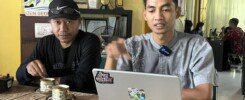

Written in conversation with Walkwithan
In today’s digital era, social media has become the main stage for tourism promotion. A single post, photo, or video can instantly attract travelers to visit a destination. But behind the viral reels and perfectly edited clips, one question often arises: how can we tell the difference between a real tour provider and someone who just sells the idea of travel online?
That’s where my conversation began — with Edy, Sam, and Safra, three licensed guides who’ve spent years on the ground, leading real tours across East Java.
Social Media vs. Real Experience
I opened our chat by asking how licensed guides see the rise of influencers in tourism.
“If we talk about social media,” said Edy, “we can show our experiences to everyone. But many of those content creators only sell the image — they don’t really organize tours. So when they finally get guests, they contact us, the licensed guides, to handle them.”
That’s a common story today: content creators with thousands of followers promoting trips they don’t actually run. They would earn comission fee from the tour provided by Edy – end up doing the real work behind the scenes — managing guests, arranging logistics, and ensuring safety.
“From now on,” I added, “we should build our social media based on the guide’s real experiences — so people can see the quality and professionalism behind the tour operator.”
The Role of Associations
We then turned to the Indonesian Tourist Guide Association (HPI) — the official body for licensed guides.
“Actually, I think there’s no problem if content creators promote our destinations,” Edy said. “They help show the beauty of Indonesia. Why not learn from them? Maybe they have better editing skills or a dslr camera quality. That’s why also I’ve started learning video editing myself — using CupCut.” Edy sees them as inspiration.
Sam, another experienced guide, added a more critical view:
“Even within HPI, not everyone follows the rules. Some leaders have their own travel agencies — which technically isn’t allowed. So it’s hard to enforce regulations when even the top doesn’t follow them. Everybody can sell tour packages now.”
Yet Sam agrees with Edy on one point: collaboration is key. They can ask to the local communities how to arrange the tour and provide local guides. “We can make better experiences for travelers. They can promote, and we can organize the tours safely and responsibly.” he added
Safra’s Story: A New Generation of Guides
Then I turned to Safra, to hear how he started in tourism.
“I heard that being a tour guide is a good business for the future,” he said. “It’s a way to earn money and practice my English. So I joined — and I’ve never looked back.”
Unlike the older generation who started with someone recomendation, Safra entered at a time when digital promotion was already shaping tourism. But he’s noticed how things have changed fast:
“A few years ago, tours were seasonal — from May to October. Now, we have guests almost every month. Many Chinese influencers are promoting Indonesia, so more Chinese tourists come to Bromo. I see them walking around every afternoon.”
The demand has shifted.
“We don’t depend only on European visitors anymore,” Safra added. “Now, most of our guests come from China, Singapore, and Malaysia. They usually travel for three days — short vacations — so Java is a good option. The challenge is maintaining those relationships.”
Old-School Marketing Still Works
When I asked Safra how he first got his guests, he admited
“There was no social media, no WhatsApp back then,” he said. “I just approached guests directly — or gave my contact to hotel staff. If guests asked about tours, the hotel would recommend me. Then I’d ask them for testimonials and tell them to share my name with friends or family.”
That simple, human touch — face-to-face communication and trust — is still the foundation of good tourism, even in the era of TikTok and Instagram.
As our discussion wrapped up, I realized something powerful: real experience still matters.
Social media may amplify visibility, but it can’t replace the professionalism and responsibility of a licensed guide.
At Sam Java Tour, we believe the future of travel belongs to collaboration — where storytellers, content creators, and certified guides work hand in hand to give travelers something more than just a pretty photo but something real.
🧭 This article is part of our “Meet the People” series on SamJavaTour.com, where we highlight the people behind your East Java adventures.